
Change language: Dutch (Nederlands) 

This article describes the history of the Zandvoort circuit, from the 1939 street circuit to the current permanent race track. Off-course with the focus on the original layout.
The origination of the Zandvoort circuit
In 1939 races where organized in the Dutch seaside resort Zandvoort at a street circuit. The success from this event convinced Major H. van Alphen that a permanent race track would be a great profit for his town. Unfortunately, the outbreak of World War Two and the following German occupation from the Netherlands interrupted this plan.
But it didn’t stop him to make preparations for the circuit. He told the Germans he wanted to build a parade street for the winners of the war. So it happens that the Germans built the main straight of the prospective circuit, not aware that the Major had other ideas with this project.
When finally the war was over, the construction of the circuit could really get started. With the rubble of the hotels who where destroyed during the war as foundation, a track was built. In 1948 the track was asphalted and at August the 7th that year. The first races where held at the brand new race track, named Circuit Park Zandvoort.
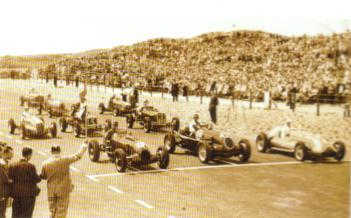
The start of the first grand prix at the new Zandvoort circuit in 1948.
The layout of the old Zandvoort circuit
The original Zandvoort circuit was very twisty, but most corners where very quick. That made the average speed very high. The first half of the track is still in use. Short after the famous ‘Scheivlak Corner’, where now the new part begins, was original a very fast left hand kink followed by a right hand kink. In 1980 the speed was reduced at this part by a new chicane, the Marlboro Corner.
A few hundred metres further was another fast kink called ‘Tunnel East’. It was named after the tunnel underneath the track at this point. In this kink two Formula one drivers lost their life, Piers Courage in 1970 and Roger Williamson in 1973. After a short straight came a very fast right left combination called “Bos In”. This combination was replaced by a chicane in 1973, the Panorama Corner. It was the first time that the layout of the track was modified…
More about the different versions of the Zandvoort circuit in the article about the layout.
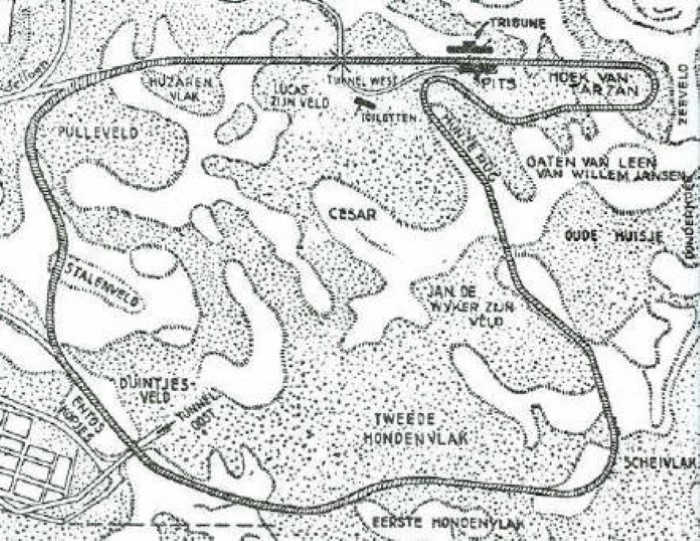 The original layout of the Zandvoort circuit. Click on the map for a lap around the old track.
Formula One races at the Zandvoort circuit
The first Dutch Grand Prix took place in 1950 as an inaugural race, just like in 1951. But already in 1948 and 1949 there was a Grand Prix of Zandvoort. The first official Dutch Formula One Grand Prix was in 1952. Except in the years 1954, 1956, 1957 and 1972 Formula One came to Zandvoort every year until 1985.
The first modifications to the Zandvoort Circuit
In 1972 the track was found to dangerous. Those years there was a controversy between those who where pro and anti the use of crash barriers of steel. The Grand Prix Drivers Association, under the lead of Jackie Stewart, where pro and found that the barriers should be placed close to the track as possible. The argument was that this would reduce the change that a car would crash into the barrier under a 90 degree angle.
The circuit exploiters, who where mostly against these steel crash barriers, prefer run-off areas with fences of gauze to slow down the cars when they went of the track. They pointed out that huge fires where caused when a cars crashed into a barrier of steel. However, the Zandvoort circuit had to change to get back the Dutch Grand Prix. With a lot of pain they could finance the required renovation works. Around the whole circuit came crash barriers and the fast right left “Bos In” combination was replaced by a chicane, the Panorama Corner.
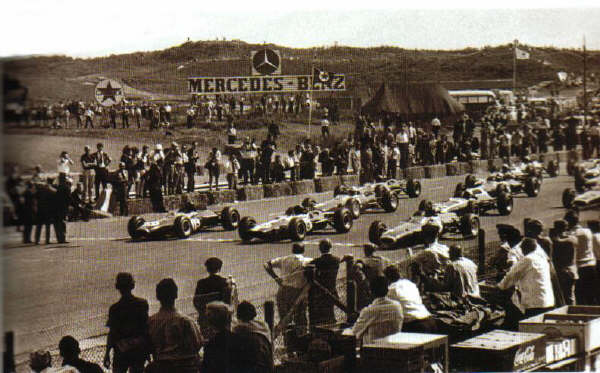
Start of the 1964 Grand Prix
The Dutch Grand Prix of 1973
Ironically enough, when Formula One returned to the Zandvoort circuit for the 1973 Dutch Grand Prix, a tragedy would confirm the vision of the those who where against the steel crash barriers. After eight laps the British driver Roger Williamson crashed with his March into the steel barrier at the inside of the Tunnel East kink. His car flipped upside down and catch fire. Fellow driver David Purley stopped and tried to turn the car upright. But despite his brave attempt to rescue his friend, Roger Williamson died in the flames.
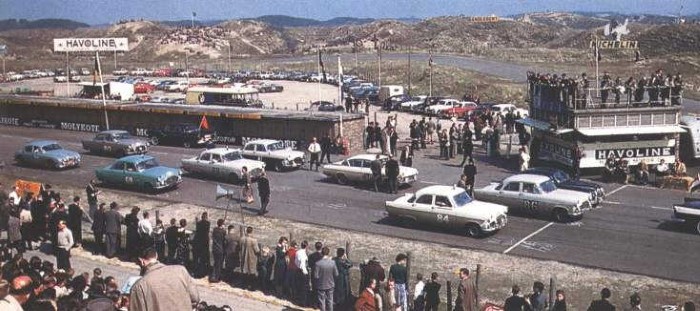
In the old days the circuit was also used for the annual Tulip Rally. For this event they changed the driving direction to anticlockwise.
The end of Formula One races at the Zandvoort circuit
The last Formula 1 race at the Zandvoort circuit for the time being was on August the 25th 1985. Teammates Alain Prost and Niki Lauda where fighting al the way to the finish. Finally Niki Lauda won the race with a lead of two tenths of a second at Alain Prost!
It was his 25th and last victory. Ayrton Senna made the podium complete with his third place. Because there was no money to finance the renovations who where required for 1986, and there was also a debt from the year before, Formula One bosses decided to remove the Zandvoort circuit from the calendar.
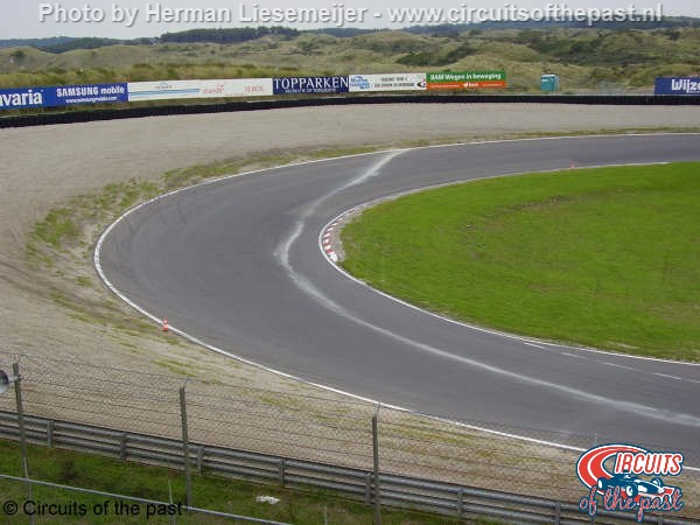 How comes the Tarzan Corner to his strange name? Click on the picture above and read the stories behind the names of the corners at the Zandvoort circuit!
Politicians who want to close the Zandvoort circuit
Unfortunately, already since the early days some politicians take actions to close the circuit. Already in the fifties messages appeared in the newspapers that the City Council wanted to close the Zandvoort circuit.
However, the first real threat came on November the 10th 1970 when the City Council decided to close the circuit if another destination for the circuit ground could be found.
This led to fierce protests from the people of Zandvoort. Local entrepreneurs took the initiative for a poll and the outcome was that 80% of the people of Zandvoort wanted to keep the circuit.
There is no other circuit in the world to which I have more beautiful memories than Zandvoort.
In the summer of 1989 I would visit Zandvoort for the very first time, during the Marlboro Race Festival, precursor of the later Marlboro Masters. If I think back to this fantastic day I still here the sloagan “Marlboro, comes where the action is!” from the speakers.
When I want to return home after my first Zandvoort visit I discovered an entrance to the old part of the circuit. Off course I could not resist the temptation, so I entered the abandoned part of Zandvoort. Via the old Bos Uit Corner I came on the old track and drove in the opposite direction as far as I could…
This is a snippet from my Ebook “The Magic of Weathered Asphalt”.
Click here for more information about this Ebook >>
Noise complaints
In 1972 the local government stopped the finance to the circuit and as a result of that the required improvements for Formula One could not go ahead. The Dutch Car Racing Association had to choose, or they dropped the circuit or they took it over. Fortunately they choose the last option. On February the 17th 1973 a 15 year lease contract was signed with the City Council.
Finance for the renovations where found and the future of the circuit looked secured. But the opposition didn’t stop. Many trials are conducted because of alleged noise nuisance. Despite the race cars use sound silencing devices at Zandvoort since 1979, the opposition was not contented. Already in 1978 the Ministry of Public Health and Environment came with the idea to change the layout of the track so that it comes further from the village.
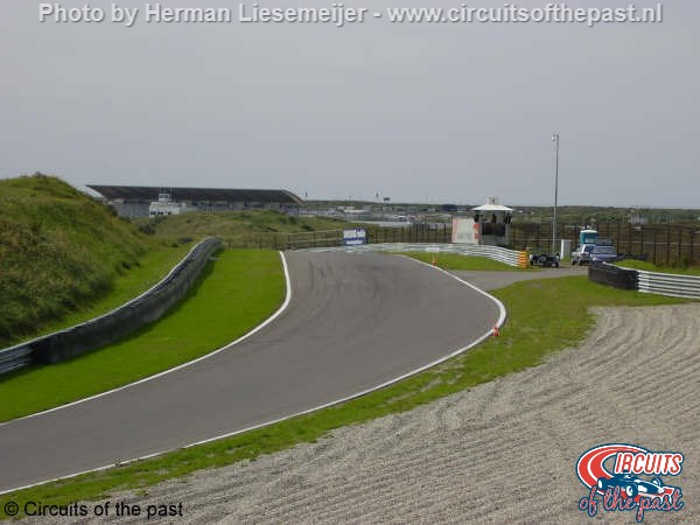 This corner with the difficult name “Scheivlak” is one of the most beautiful corners in the world. Click on the picture for more information about the Scheivlak Corner.
However, in 1981 the municipality Council decides that the target would be to close the race track. On February the 27th 1982 Dutch race fans where demonstrating in front of the parliament. A foundation “Save the Zandvoort circuit” was founded, and a petition handed to Secretary of State Mr. Kosto.
During the municipal Council elections from 1982 the Dutch Labour Party suffers sensitive losses. This was mainly caused by their anti circuit policy.
May the Zandvoort circuit still continue?
In 1985 came a revolution regarding the policy towards the circuit. The Council of State found that the presence of the circuit did not obstruct the extension of the village and could stay at the current location. But new troubles where underway…
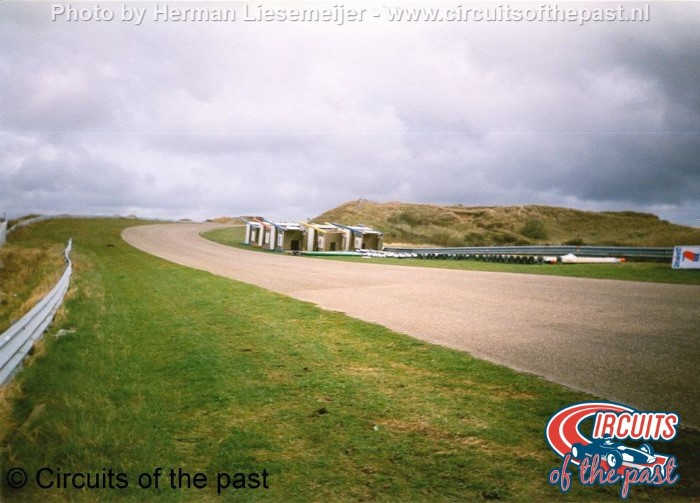 From 1989 to 1998 this beautiful section of the race track was not used and neglected. Click on the picture to see how the layout of the Zandvoort circuit changed by the years.
At the end of 1985 the municipal Council came with the idea to sell a part of the circuit ground to a Dutch group of investors who want to built a holiday resort in Zandvoort. Because the circuit was in financial trouble they had no other choice than accept this.
A solution was found in the old plan from 1978 to change the layout of the circuit, which was also a good solution for the noise nuisance. In January 1987 the Provincial Council confirmed this plan. However, the circuit was in deep financial trouble and was declared bankrupt on June the 16th 1987.
A new start for the Zandvoort circuit
On the 21st of September 1987 the Foundation Exploitation Circuit Park was founded to make a new start. A new interim circuit with a length of only 2.5 km (1.56 Mile) opened in the summer of 1989. This was a temporary solution, pending a later planned extension. This was definitely the end of the original lay out of the Zandvoort circuit.
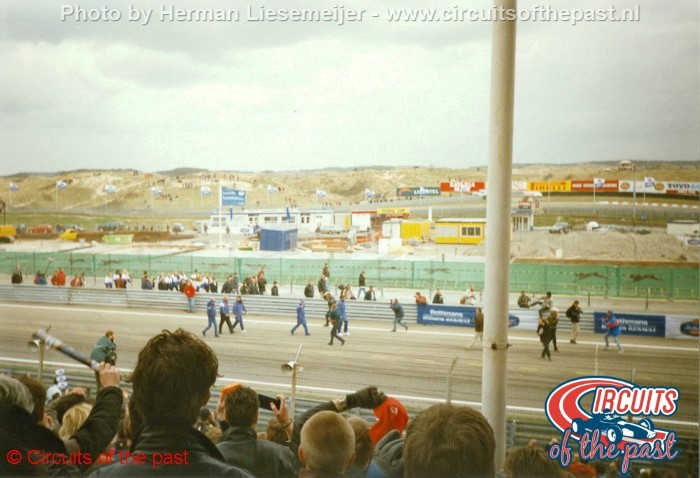
Above the demolished old pits in 1997, in 1998 there was a brand new pits (picture below).
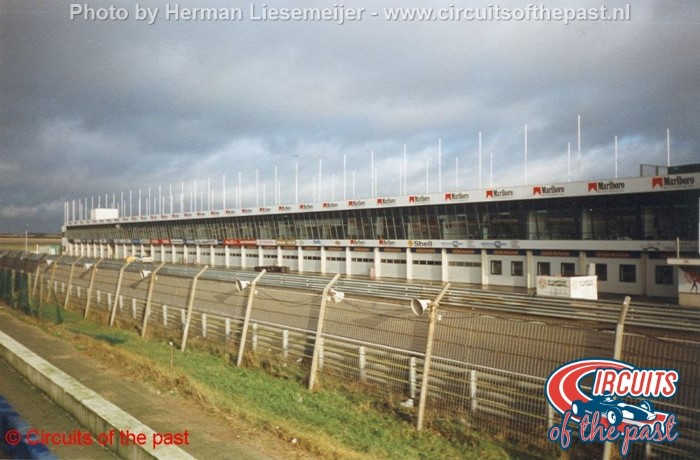
During the period of the interim circuit, the circuit was renovated bit by bit. Among other things a new pit complex was rising in 1998. Also a new lease contract to 2013 was signed with the local government (who are the owners of the ground). This contract was an important condition to find investors to finance the planned extension.
The new Zandvoort Circuit
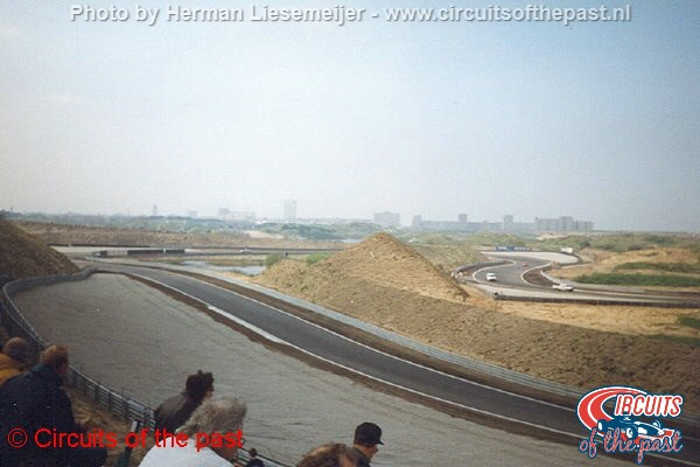
After more than nine years of legal battle, they finally started the construction of the new part of the circuit at the end of 1998. In the spring of 1999 the new circuit was opened and the demanding section from the “Hunzerug” to the “Scheivlak” was taken in use again. That made the Zandvoort circuit again to one of the most beautiful race tracks in the world!
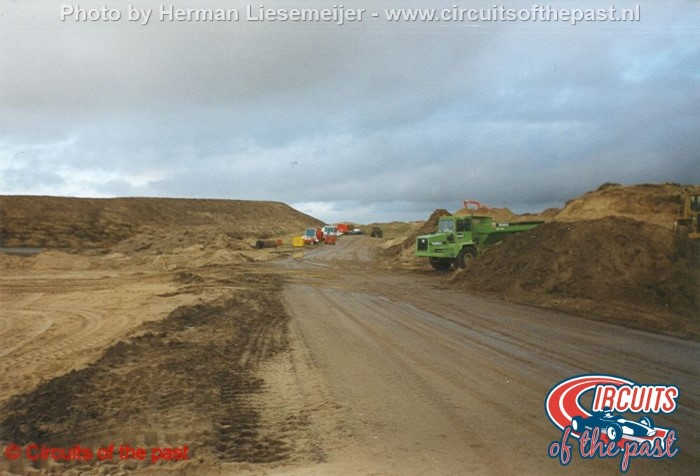
Above the construction works at the end of 1998. Below the opening of the new Zandvoort circuit in the spring of 1999.
New obstructions…
In 2008 a new lease contract up to 2042 was signed. However the are still people who want to obstruct the circuit. A decision to give the circuit more noise days was cancelled and as a result of that, the Masters of Formula 3 race – especially created for Zandvoort in 1991 – was held on Zolder in Belgium for two years.
There was also a plan from the Provincial Executive to ‘move over’ the circuit from Zandvoort to Julianadorp, a village near Den Helder in the North of the Netherlands. Move over the circuit would be nothing else than destroying the beautiful Zandvoort circuit, with all the history, to build a new race track on the new location. Without a doubt, such a new track would be a modern stop and go circuit designed by Mr. Tilke.
Despite the fact that a majority of the residents of Zandvoort, already 60 years familiar with the sound of racing engines, don’t want to loose the circuit. And the protests of the inhabitants of Julianadorp who don’t want a race track in their backyard, the investigation continued. Fortunately this terrible plan is off the table now! But you can still wait for the next attack to the circuit…
Formula 1 returns to Zandvoort!
After 27 years, ex director and circuit owner Hans Ernst sold the Zandvoort circuit in February 2016 to the Chapman Andretti Partners company, which is co-owned by a member of the Dutch Royal family. They have ambitous plans with the circuit and speak out the ambition to bring Formula One back to Zandvoort.
With the popularity of Max Verstappen, the call for a Grand Prix in the Netherlands is growing. But a Dutch Grand Prix at the Zandvoort circuit would mean adjustments to the track. Since the late eighties there is a terrible plan to demolish the Gerlach and Hugenholtz Corners to enlarge the paddock…
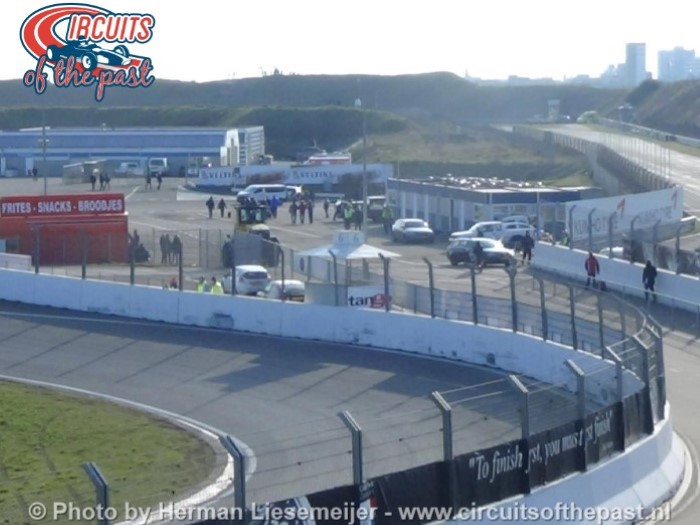
However, on Mai 14, 2019 the return of Formula One to Zandvoort in 2020 was officially announced. Fortunately, they would not demolish parts of the track. Only some parts need to be widened, and at two bends the banking was increased considerably. That means that Zandvoort has two high banked corners now, which is unique for a Formula One track.
More about the adjustments to the track in the article: “Layout Zandvoort circuit – How it changed through the years!“.
© Text: Herman Liesemeijer Pictures: Rob Petersen and Herman Liesemeijer
Subscribe to our YouTube Channel: youtube.com/circuitsofthepast